Local Listings and Reputation Foundations for Service Businesses
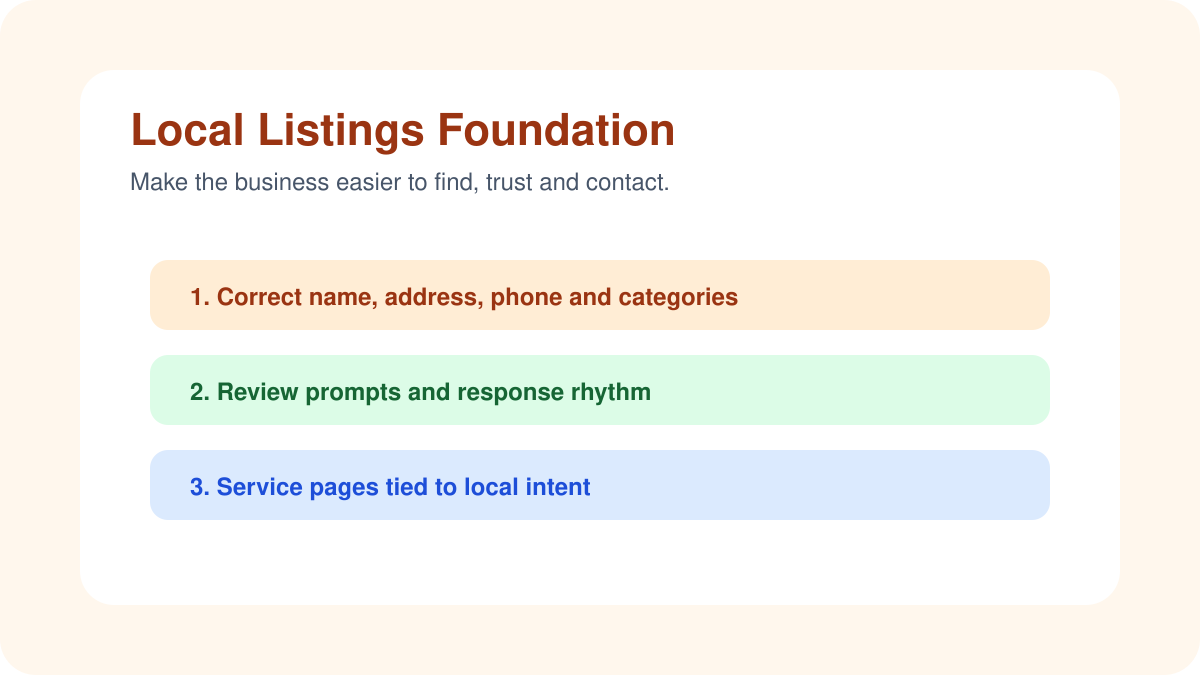
Local visibility is not only a ranking problem. It is a trust problem. A potential customer may find the business through Google, a map result, a directory, a review, a paid ad or a referral. Before contacting the company, they look for signs that the business is real, relevant and capable. If the business name, address, phone number, categories, hours, reviews and service descriptions are inconsistent, trust weakens before the visitor reaches the website.
Why listings still matter
Some founders think local listings are basic setup work that only matters at launch. In reality, listings are part of the growth system. They tell search engines what the business does, where it operates and how customers describe the service. They also give buyers quick signals about reliability. A complete Google Business Profile with accurate categories, useful services, recent photos and thoughtful review responses can improve the path from search to enquiry.
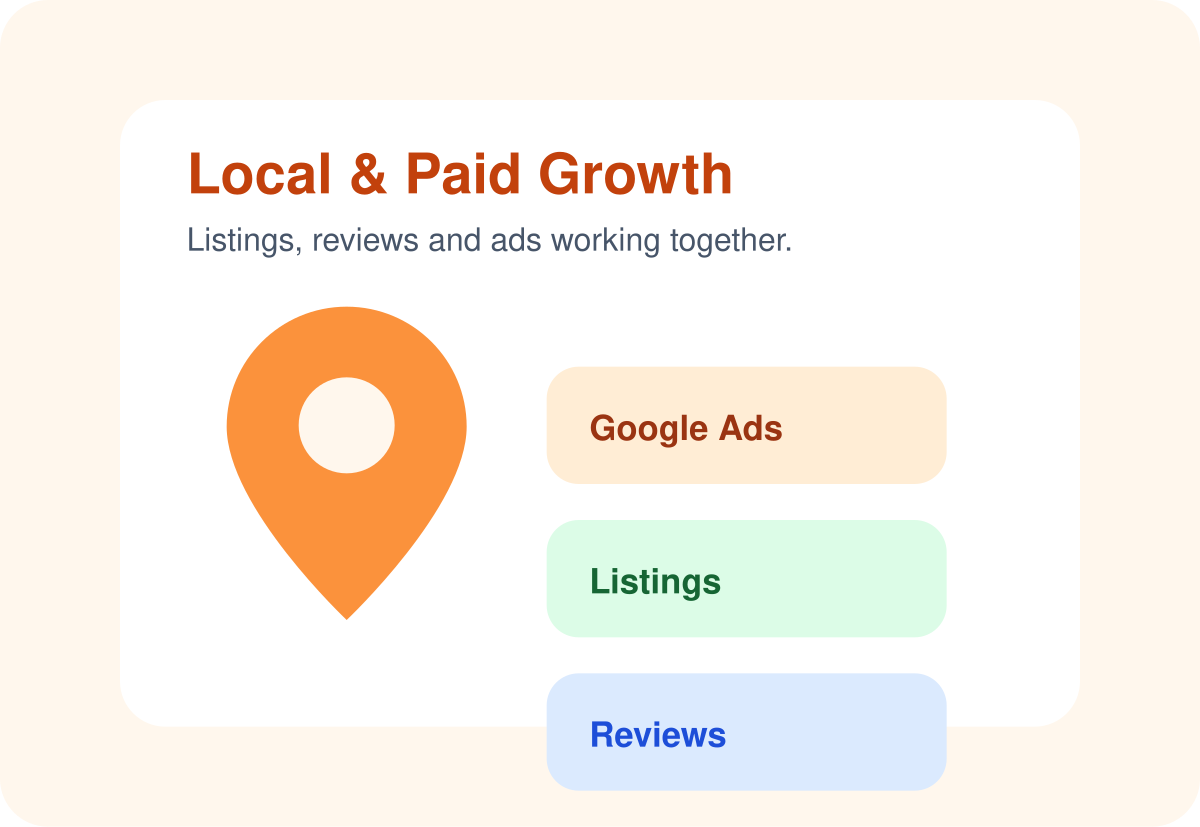
Listings also affect paid and organic performance indirectly. If a person clicks an ad and then checks the map profile, weak reviews or inconsistent details can reduce conversion. If a visitor finds a service page and then searches the brand name, an incomplete profile can create doubt. Local visibility is strongest when the website, profile, reviews and ads tell the same story.
Start with name, address, phone and category accuracy
The first step is accuracy. The business name should be consistent. The phone number should work. The address or service area should reflect how the business actually serves customers. Hours should be current. Primary and secondary categories should match the work the business wants to sell. These details may feel small, but they shape how both search engines and buyers understand the business.
- Name: use the real business name consistently across major profiles.
- Address or area: make the location model clear and accurate.
- Phone: use a number that can be answered or tracked properly.
- Categories: choose categories that match profitable services.
Category selection deserves more attention than it usually receives. A business may choose a broad category because it feels safe, but a more precise category may match buyer intent better. The category should support the service page strategy. If the business wants more enquiries for advisory, installation, repair, consulting or managed services, the listing and website should reinforce that direction.
Build service pages that support local intent
A listing can introduce the business, but the website must explain the offer. Each important service should have a page or section that answers practical buyer questions. What problem does the service solve? Who is it for? What happens after contact? What proof or experience supports the business? What locations or customer types are served? These pages help visitors understand the fit and give search engines more context.
Local service pages should avoid thin, copied location text. A page that simply swaps city names is not useful. Better pages explain real service considerations, local buying triggers, common customer questions and the practical process. The page should also make contact easy. Sticky navigation and clear calls to action help readers move from education to enquiry without getting lost in long content.
Reviews should reinforce the services you want to grow
Reviews are more than stars. They are public language about the business. A strong review can mention responsiveness, expertise, outcome, communication, local knowledge or a specific service. This helps future buyers understand why the company is credible. Businesses should never pressure customers or write fake reviews, but they can make review requests easier by asking at the right time and reminding customers what kind of experience is useful to describe.
Review responses matter too. A thoughtful response shows that the business is active and professional. It can reinforce service language naturally without stuffing keywords. For example, a response might thank a customer for trusting the team with a local listing cleanup, finance dashboard, SaaS stack review or marketing plan. The response should sound human and specific.
Connect local listings to ads and tracking
Local visibility and paid search should not operate separately. If Google Ads drives calls or forms, the business needs to know whether those enquiries become qualified opportunities. Call tracking, form tracking and source notes can help, but only if the team uses them consistently. A listing may create calls that are not visible in website analytics. Ads may create traffic that later returns through the brand name. The founder needs a simple way to review all local demand signals together.
That review should include the quality of enquiries, not just the quantity. Which suburbs, cities, services or search terms produce the best conversations? Which calls are poor fit? Which reviews mention the services the business wants more of? Which pages help visitors decide? These questions turn local marketing from a checklist into a growth system.
Local trust compounds
Local listing work can feel slow because it is foundational. But foundations compound. Accurate profiles improve trust. Better reviews improve conversion. Stronger service pages answer buyer questions. Cleaner tracking improves budget decisions. Over time, the business becomes easier to find and easier to choose. That is the real purpose of local visibility: not just appearing in search results, but helping the right customer feel confident enough to contact the business.
A practical first-week cleanup plan
A local business can make useful progress in one week. On day one, collect the main public profiles and check name, address, phone, website URL, opening hours and service areas. On day two, review categories and services against the work the business wants more of. On day three, update descriptions and photos so the profile feels active and specific. On day four, review recent customer feedback and draft a simple review request process. On day five, check whether website service pages match the profile categories and whether the contact path is obvious.
The second week can focus on tracking and improvement. Add call or form tracking where appropriate. Create a short note field for staff to mark enquiry quality. Record which services people ask about and whether they came from organic local search, paid search, referral or direct traffic. This does not require a complex system. It requires enough discipline to learn which local signals are creating useful demand.
Once the basics are accurate, the business can improve steadily. Add better service explanations. Publish helpful posts that answer local buyer questions. Ask satisfied customers for honest reviews at the right moment. Respond professionally. Keep photos current. Review search terms and profile insights monthly. Local growth rewards consistency because every improvement makes the business easier to understand and trust.
Measure the quality of local demand
Local demand should be measured by quality, not only by visibility. A profile can receive more views while still producing poor enquiries. Track whether calls and forms match the services, locations and budgets the business wants. Ask staff to note repeated questions, wrong-fit requests and strong-fit opportunities. These notes help decide whether the profile needs better categories, the website needs clearer service pages or ads need tighter targeting.
When the business measures quality, local marketing becomes more strategic. The founder can see which services deserve more content, which locations are worth pursuing and which trust signals should be strengthened. That is much more useful than celebrating impressions that never become customers.