Choosing the Right SaaS Stack Before Buying Another Tool
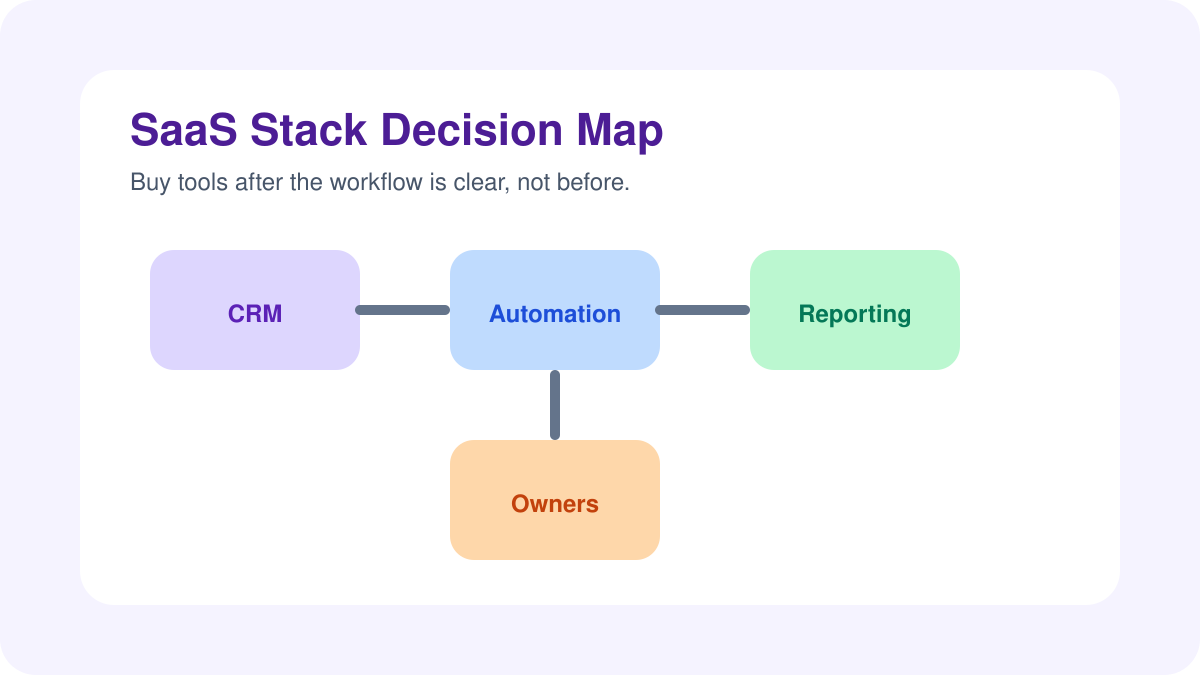
A new SaaS tool can feel like progress before it has solved anything. The sales page is clean, the dashboard looks modern and the automation examples make the business feel as if it is one subscription away from control. The problem is that software cannot repair an unclear workflow. If the team does not know who owns follow-up, what information matters, which leads should be prioritized or how decisions are reviewed, the new tool simply gives confusion a better interface.
Start with the workflow, not the product category
Founders often begin by asking which CRM, email platform, reporting dashboard or project management tool is best. A better first question is: what workflow are we trying to improve? The answer may involve capturing website enquiries, qualifying leads, sending follow-up messages, tracking proposals, onboarding customers, reporting campaign performance or managing delivery. Each workflow has a beginning, a middle and an outcome. Until those steps are visible, the business cannot judge whether a tool is suitable.
Map the work as it happens today. Where does an enquiry come from? Who receives it? What information is missing? How quickly does someone respond? What message is sent? Where is the next step recorded? How does the founder know whether the enquiry became revenue? This map may reveal that the business does not need a new platform immediately. It may need cleaner forms, simpler ownership, a better follow-up template or a reporting rule that connects marketing source to sales outcome.
Decide what each tool is responsible for
A practical SaaS stack has clear responsibilities. The CRM is responsible for relationship and pipeline information. The website form captures the initial enquiry. The email platform supports nurture or follow-up. The analytics tool shows where visitors come from. The accounting tool shows invoices, cash and payment timing. The reporting layer brings the most important signals together. When responsibilities overlap without rules, data becomes unreliable. Two tools may store different versions of a contact, or a team may update one platform while ignoring another.
- Capture: where does the first enquiry or signup enter the business?
- Qualify: what information decides whether the opportunity is worth time?
- Follow up: who responds, when and with which message?
- Report: where can the founder see what happened?
These responsibilities should be written down before software is changed. If nobody can explain why a tool exists, the tool is either redundant or poorly integrated. A simple stack with clear rules is usually better than a complex stack that requires constant attention from the founder.
Avoid buying automation before fixing the message
Automation is useful when it repeats a good process. It is dangerous when it scales a weak one. If the contact form asks the wrong questions, automation will move poor data faster. If the offer is unclear, automated emails will repeat unclear positioning. If lead scoring is based on vanity metrics, the team may prioritize the wrong people. Before buying or expanding automation, review the message, qualification criteria and follow-up logic.
For example, a service business may want automated follow-up after a website enquiry. That can be helpful, but only if the first response answers the questions buyers actually have. What happens next? How quickly will someone respond? What information should the buyer prepare? What kind of projects are a good fit? If the automated message is vague, the buyer still feels uncertain. The technology worked, but the experience did not.
Use integration as a decision filter
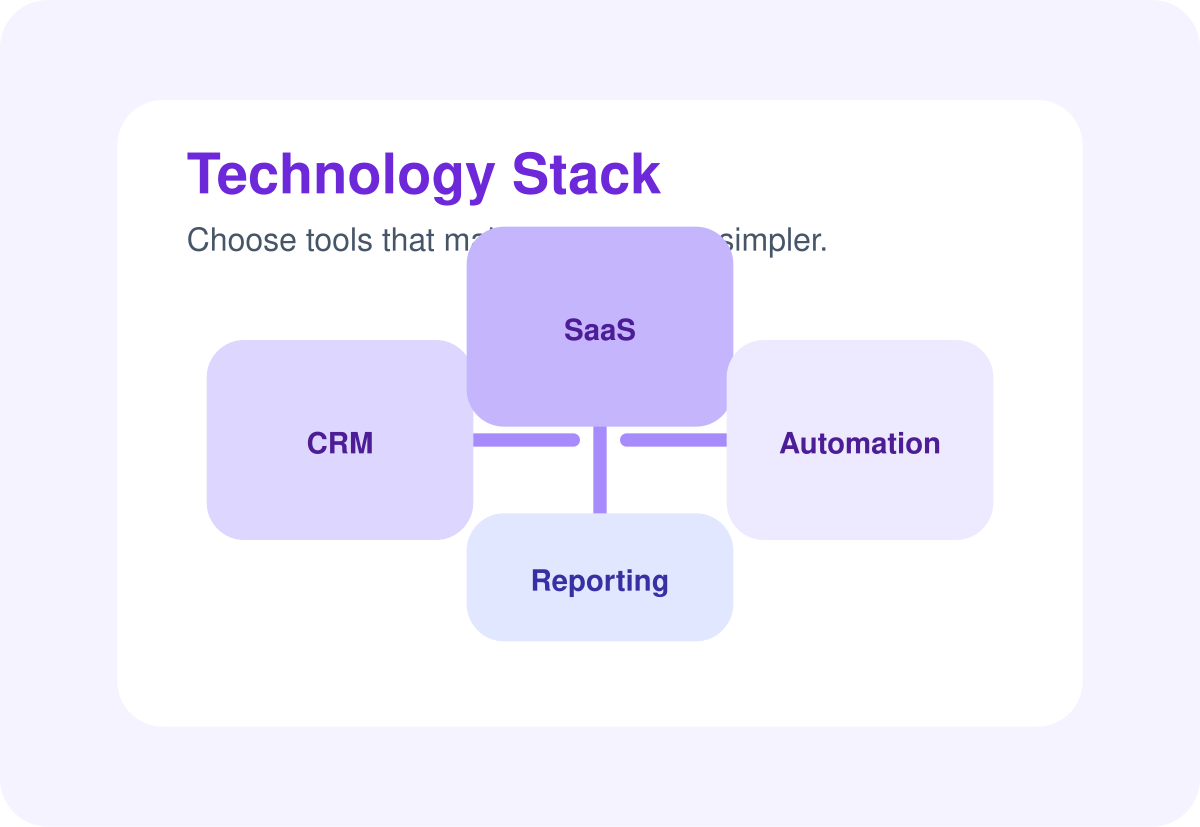
A tool does not need to integrate with everything, but it should fit the core flow of the business. If website forms cannot send useful information to the CRM, the team will retype data or skip details. If call tracking is disconnected from campaign reporting, Google Ads decisions become guesswork. If the proposal tool is disconnected from the pipeline, the founder cannot see where deals stall. Integration should be judged by whether it improves decisions, not by whether a vendor offers a long list of possible connections.
Before choosing a tool, list the data that must move. Contact name, email, phone, website, service interest, source, location, budget range, urgency, sales stage, proposal value and outcome are common examples. Then decide which tool owns each field. This prevents the common problem of collecting more information than anyone uses. Data should earn its place in the process.
Make ownership visible
Many SaaS stacks fail because ownership is unclear. The tool is installed, but nobody knows who maintains fields, checks errors, updates templates, reviews reports or trains new users. A founder may assume the team is using the system while the team quietly returns to spreadsheets. Every important tool needs an owner. That owner does not have to do all the work, but they must know whether the process is being followed and whether the tool is still useful.
Ownership also includes review dates. A business should periodically ask whether each subscription still supports the operating system. Is the tool used weekly? Does it improve follow-up, visibility, conversion, delivery or reporting? Does it reduce manual work? Does it create data the founder trusts? If the answer is no, the tool needs repair, replacement or removal.
A better SaaS stack is usually calmer
The best SaaS stack for a growing business is not the one with the most features. It is the one that supports the way the company should operate. It captures clean information, makes follow-up visible, reduces repeated work and gives the founder a reliable view of what is happening. Buy tools after the workflow is clear. Connect tools around decisions. Remove tools that create noise. That is how technology becomes a growth asset instead of another dashboard to manage.
Questions to ask before approving a subscription
Before approving a subscription, ask what decision the tool will improve. Will it help the team respond faster, qualify leads better, reduce manual work, improve reporting or protect customer experience? Ask who will own the tool and how success will be reviewed. Ask what data must be migrated or cleaned. Ask what existing tool may be removed if the new tool works. If the business cannot answer these questions, the purchase may be premature.
Also ask what would happen if the business waited thirty days. Sometimes the urgency comes from frustration rather than strategy. A short workflow cleanup may reveal that the current tool is good enough. In other cases, the cleanup makes the need for a new tool clearer and helps the business choose better. Either way, the founder avoids buying software as a substitute for operational thinking.
The best technology decisions create calm. They remove duplicate work, reduce missed follow-up and make important signals easier to trust. If a tool cannot support those outcomes, it should not become part of the growth stack yet.
A small audit can prevent a large mess
Before changing platforms, run a small stack audit. List every tool, monthly cost, owner, purpose and the decision it supports. Mark tools that are used daily, weekly, rarely or never. Then trace one real enquiry through the stack from first contact to sale or loss. This exercise quickly reveals duplicate data entry, unclear ownership, missing follow-up and reports that nobody trusts.
The audit does not need to be perfect to be valuable. Even a rough map can save months of frustration because it shows whether the business needs a new tool, a cleaner process or a better rule for using what it already has.