Turning Business Data Into Weekly Decisions
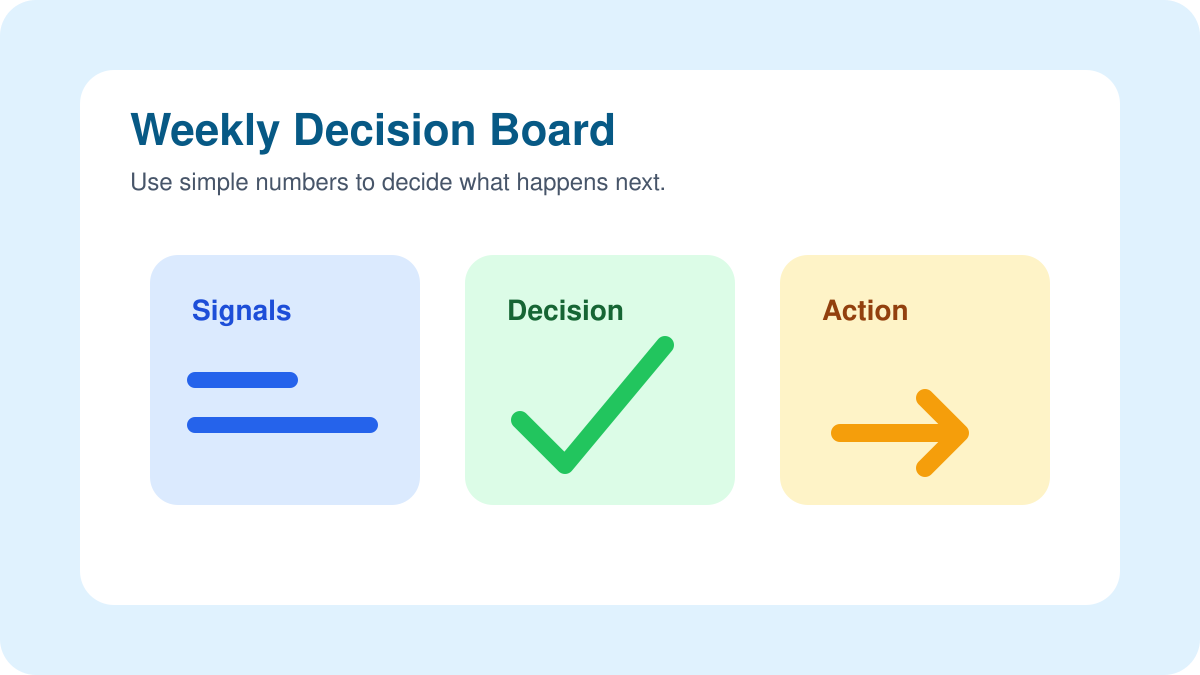
Most businesses have more data than they use. Website analytics, call logs, form entries, accounting reports, CRM notes, email statistics, ad dashboards and local listing insights all produce numbers. The problem is not the existence of data. The problem is that the data rarely turns into a clear weekly decision. A founder can spend an hour reviewing dashboards and still not know what should change.
A decision board is different from a dashboard
A dashboard displays information. A decision board helps the business choose an action. The distinction matters. A dashboard may show traffic, leads, conversion rate and revenue. A decision board asks what those numbers mean. Did traffic increase from the right audience? Did leads match the services we want? Did conversion fall because the page is weak or because the source changed? Did revenue grow in a way that supports margin and capacity? The board turns numbers into questions that lead somewhere.
The best decision board is small enough to use every week. It should not include every metric available. It should include the signals that affect the next growth decision. For many founder-led companies, those signals include enquiry source, lead quality, service interest, follow-up speed, conversion stage, average value, margin pressure, cash timing and delivery capacity. The exact list depends on the business model, but the purpose is always the same: make the next action clearer.
Choose signals that connect across the business
Marketing data alone can mislead. Finance data alone can arrive too late. Operations data alone can explain pressure without showing where demand came from. Useful signals connect across the business. For example, a local listing may produce more calls, but the decision board should show whether those calls were qualified, whether they converted and whether the work was profitable. A blog post may attract traffic, but the board should show whether it supports the services the business wants to grow.
- Demand signal: where did attention or enquiries come from?
- Quality signal: did the opportunity match the business?
- Money signal: did the work support margin and cash?
- Capacity signal: can the team deliver more of this work?
When these signals are reviewed together, the founder can avoid false conclusions. A channel that looks quiet may produce the best opportunities. A busy channel may produce low-value work. A service that creates revenue may create too much delivery strain. A page that ranks well may attract readers who are not buyers. The decision board keeps the business from optimizing one number while damaging another.
Create a weekly review rhythm
The review rhythm matters more than the software. A weekly review can be done in a spreadsheet, CRM report, dashboard or simple document. The important part is the habit. Review the same core signals each week. Note changes. Ask what caused them. Decide one action. Assign an owner. Set a review date. This creates movement without turning reporting into a full-time job.
Keep the meeting focused. If the conversation becomes too broad, return to the decision question. What should we do next because of what we learned? The answer might be to improve a landing page, call back leads faster, pause a keyword, request more reviews, rewrite a service description, change a pricing assumption, clean up CRM fields or create a new blog post around a repeated buyer question.
Separate facts, interpretation and action
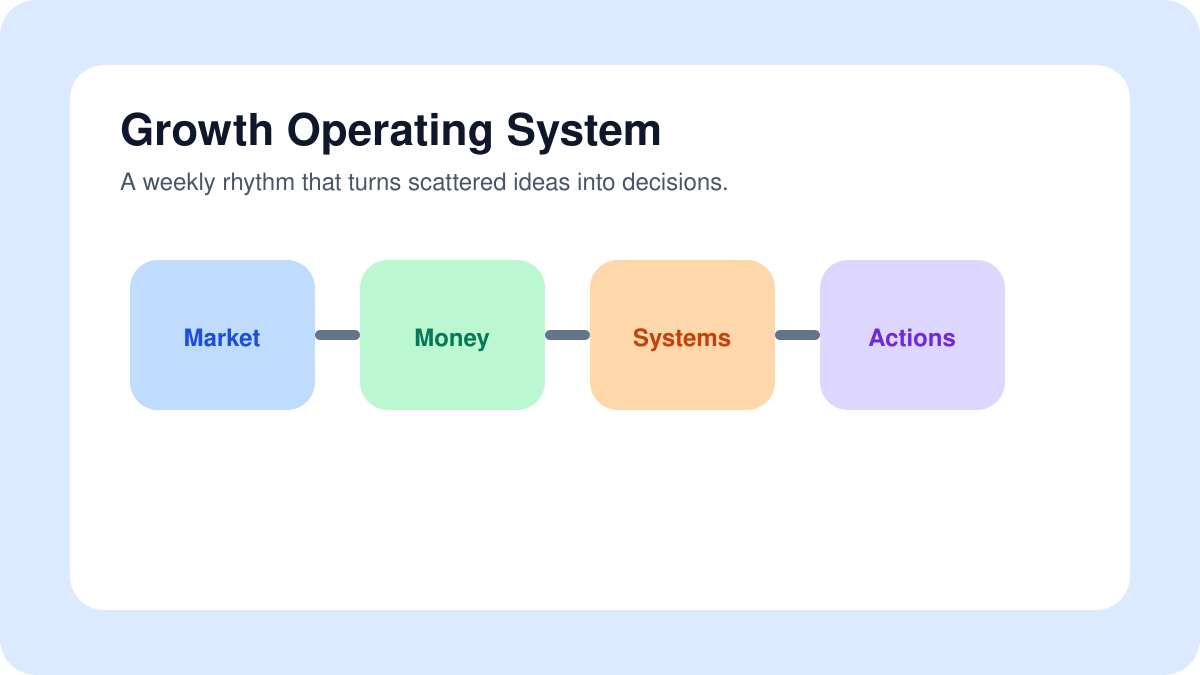
A useful decision board separates facts, interpretation and action. The fact may be that form enquiries increased by twenty percent. The interpretation may be that a new local page is attracting more relevant visitors, or that spam increased, or that a paid campaign changed the mix. The action depends on the interpretation. If the leads are better, the business may invest more. If the leads are poor, it may adjust targeting or forms. If the source is unclear, it may improve tracking before spending more.
This separation prevents the team from reacting too quickly. Numbers create clues, not automatic answers. A calm review gives the business time to understand what changed. It also makes reporting more honest. If the team is unsure, the action may be a small test or a tracking improvement rather than a major decision.
Use plain language notes
Plain language notes make the decision board more valuable over time. Write down what happened in normal business language. “Three enquiries came from the new local listing, but two were outside our service area.” “The SaaS comparison article attracted traffic, but no demo requests yet.” “Google Ads produced fewer leads, but two were high-value.” “The finance review shows this service needs a higher deposit.” These notes help future decisions because they preserve context that numbers alone lose.
The notes also help the founder see patterns. If poor-fit leads keep coming from the same channel, targeting needs work. If good leads stall after the first call, follow-up needs work. If profitable services are underpromoted, the website and content plan need work. If delivery pressure keeps appearing after sales growth, pricing or capacity needs work. Patterns are where the value of weekly review compounds.
The goal is better decisions, not prettier reports
A founder does not need perfect reporting to make better decisions. Start with the information available, but make it useful. Choose a few connected signals. Review them weekly. Write plain language notes. Decide one action. Improve the board as the business learns. Over time, the company becomes less reactive because the important signals are visible. Data becomes a working habit rather than a collection of dashboards.
What to include in the first version
The first version of a decision board can be simple. Include total enquiries, qualified enquiries, main sources, services requested, follow-up status, estimated value, notes about quality and the next action. Add finance signals such as average invoice value, deposit timing or margin pressure if those numbers are easy to access. Add delivery notes if capacity affects which work should be promoted. The board should fit on one page or one screen so the founder can review it without feeling trapped in analysis.
It is also useful to include a “decision made” field. This field forces the review to end with action. The action may be small: rewrite a form question, call back high-value leads faster, update a Google Business Profile category, pause one ad group, add a case study prompt or create a blog post answering a repeated sales question. Small actions compound when they are chosen from evidence.
Over time, the board can become more sophisticated. It may pull from analytics, CRM, accounting and ad platforms. But sophistication should come after the habit. A messy board that creates a useful decision is better than a beautiful dashboard nobody uses. The founder’s goal is not to admire data. The goal is to make the next week more focused than the last one.
Protect the review from becoming theatre
Reporting can become theatre when people spend more energy explaining numbers than improving the business. Keep the review honest by asking what changed, why it may have changed and what will be done next. If nobody knows the cause, make the action a small investigation. If the signal is clear, assign the improvement. If the number does not affect a decision, remove it from the weekly board.
The discipline is simple but powerful. Every metric should earn its place by helping the business choose. This keeps the founder focused on movement instead of measurement for its own sake.