How Founders Can Build a Practical Growth Operating System
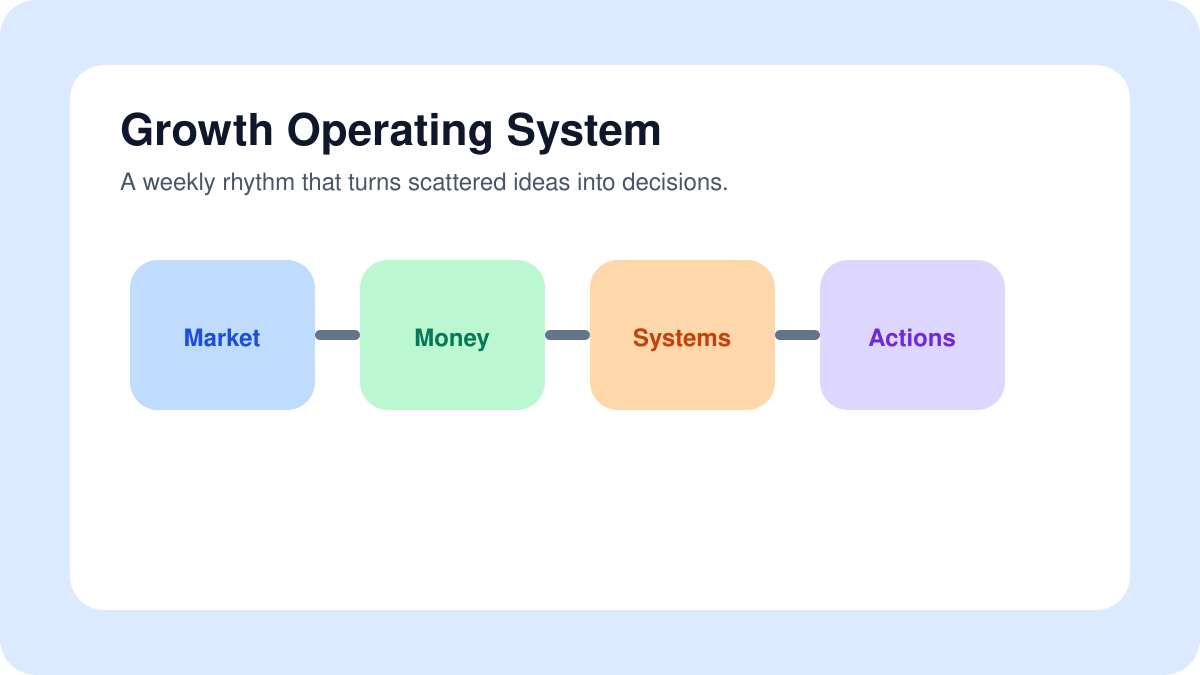
A founder does not need another folder full of strategy notes if the business still cannot decide what to do on Monday morning. Most growing companies already have plenty of ideas. They have website ideas, advertising ideas, software ideas, hiring ideas, sales ideas and finance ideas. The hard part is turning those ideas into an operating system that makes the next decision easier. A practical growth operating system is the rhythm that connects market signals, financial reality, workflow discipline and weekly action.
Why scattered growth activity feels so exhausting
Scattered activity is tiring because it forces the founder to re-evaluate the business from scratch every time a decision appears. Should the company spend more on Google Ads? Should the website be rebuilt? Should the CRM be replaced? Should a new service page be written? Should the pricing be adjusted? Each decision may be reasonable, but without a shared operating picture, every question becomes a debate. The founder has to hold the whole company in their head while everyone else argues for the part they can see.
The operating system solves that by creating a common set of signals. It does not remove judgment. It improves judgment. When the team can see which leads are best, which offers are profitable, which tools are being used, which follow-up steps are missing and which content is attracting the right audience, the next action becomes less mysterious. The work becomes a sequence instead of a pile.
The four parts of a useful growth system
The first part is market clarity. The business needs to know who it serves best, what trigger causes those buyers to look for help and which messages make the offer feel relevant. Without market clarity, the business creates content and campaigns for vague audiences. Traffic may increase, but the sales conversation remains weak because the people arriving are not the right fit or do not understand why the offer matters now.
The second part is money clarity. Growth work has to respect margin, cash timing and delivery capacity. A campaign that fills the calendar with poor-fit work can make revenue look better while making the company harder to run. A service that is easy to sell but difficult to deliver may create pressure rather than profit. Money clarity helps the founder decide which offers should receive more attention and which activities should be slowed down until the economics improve.
The third part is system clarity. This includes the website, CRM, forms, email follow-up, reporting dashboards, proposal process and internal ownership. A business does not need a perfect technology stack, but it does need a visible path from enquiry to decision. If leads enter the business but nobody knows who should respond, what should be sent or how fast follow-up should happen, marketing effort leaks away. System clarity turns attention into a process.
The fourth part is action clarity. Founders are often surrounded by reports that describe what happened but do not explain what should happen next. Action clarity means the weekly review ends with a short list of decisions. Which page needs improvement? Which campaign needs a budget change? Which service needs clearer qualification? Which tool is creating friction? Which customer segment deserves more focus? The review should create movement.
- Market: who is the best buyer and what problem creates urgency?
- Money: which work creates profit, cash and delivery confidence?
- Systems: what process turns attention into follow-up and sales?
- Action: what should be improved this week?
Start with a weekly growth review
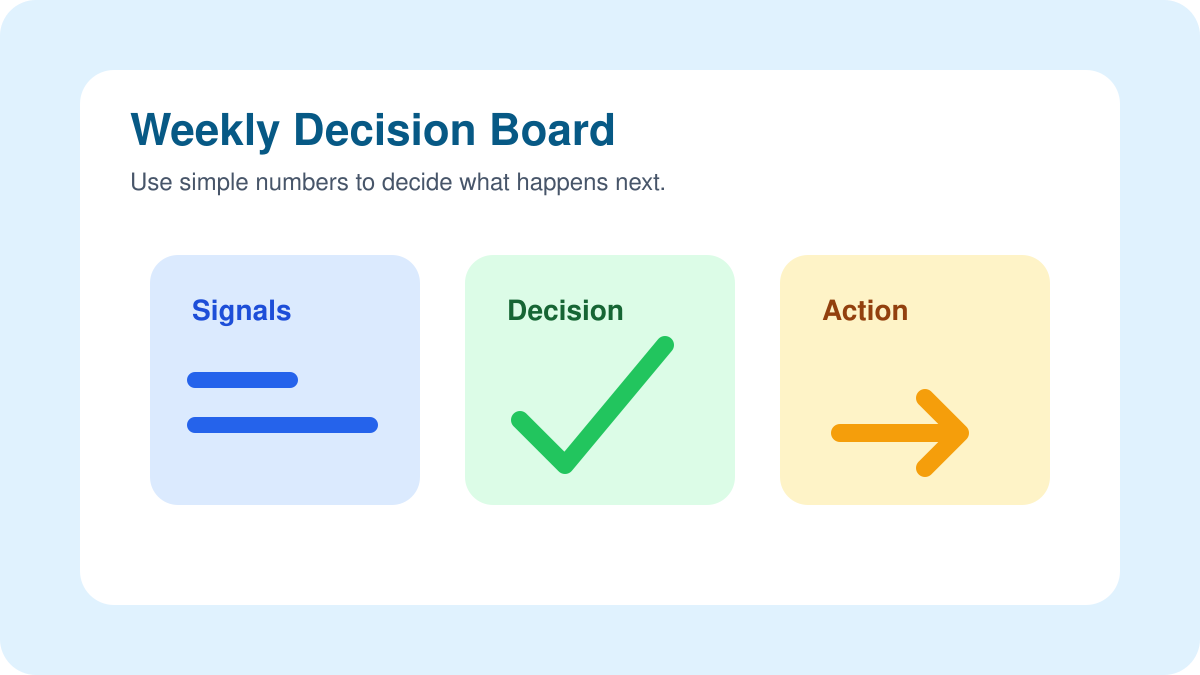
The simplest way to build the system is to create a weekly growth review. This does not need to be a long meeting. In fact, it should not become another performance. The founder or leadership team should review a small number of signals: enquiry volume, enquiry quality, source of leads, conversion path, sales follow-up, work sold, margin pressure, cash timing and any operational blockers that affected delivery. The point is to connect marketing activity to business reality.
A good weekly review asks better questions than a generic dashboard. Did the best leads come from search, referrals, ads, social proof, local listings or direct outreach? Did those leads ask for the services the business wants to sell? Did the website answer their first questions? Did the contact path work? Did the team follow up quickly? Did the sold work fit capacity? Did the revenue create enough margin to justify the activity? These questions reveal whether growth is healthy or merely busy.
Choose one bottleneck at a time
One of the most useful habits is choosing one bottleneck at a time. If the website gets traffic but no enquiries, the problem may be positioning, page structure or calls to action. If enquiries arrive but are poor fit, the problem may be targeting, service page language or qualification. If good enquiries arrive but do not close, the problem may be follow-up, proof, pricing or proposal structure. If deals close but cash feels tight, the problem may be payment terms, scope, margin or delivery capacity.
Trying to fix every bottleneck at once creates more noise. The operating system should make the sequence visible. Fix the most expensive leak first. Then review again. This keeps growth work practical and measurable. A founder can see whether the change improved lead quality, conversion, profit, speed or clarity. If it did, the business keeps the improvement. If it did not, the team learns quickly and adjusts.
Document decisions so the system survives a busy week
The operating system should not depend on memory. Founders are busy, and good decisions can disappear under delivery pressure. Keep a simple decision log. Record the bottleneck, the action chosen, the owner, the expected signal and the review date. This creates accountability without requiring a complex project system. Over time, the log becomes a record of how the company thinks. It shows which changes worked, which assumptions were wrong and which issues keep returning.
This documentation also helps new team members understand the business. Instead of learning from scattered comments, they can see the logic behind marketing, finance and technology decisions. They can understand why one service is prioritized, why one customer segment matters more, why one SaaS tool exists and why a campaign is being measured in a particular way. The operating system becomes part of the company’s knowledge base.
A practical system beats a perfect plan
The best growth operating system is not the most complex. It is the one the founder actually uses. It should be simple enough to review every week, specific enough to guide action and flexible enough to adapt as the business changes. Start with market, money, systems and action. Keep the signals visible. Make one decision at a time. Improve the business in sequence. That is how scattered activity becomes a growth system.
What to do in the first month
In the first month, keep the system deliberately small. Choose five to eight signals, not fifty. Create one place to record weekly notes. Pick one person to maintain the board. Review the last ten to twenty enquiries and mark which were genuinely useful. Look at the services sold and ask whether they created the kind of work the business wants more of. Review the website pages that prospects see before contact. Then choose one improvement that can be completed within two weeks.
This first month is about building trust in the habit. If the review is too complicated, people stop using it. If the review creates a useful decision, the team starts to respect it. Once the rhythm is working, add better tracking, cleaner dashboards and deeper analysis. A founder-led business rarely needs more reporting at the beginning. It needs a practical way to turn what it already knows into action.